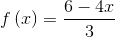
To start, the definition of a polynomial is a function that follows the following form:


I'll break it down by these two boxes I have created. The red box is stating the minimal requirements for a polynomial. What I mean by this is that for it to be a polynomial, it must at least go to the second power. In short, for it to be a polynomial, it must at least be a quadratic, and must have at least three terms. The blue box is the hypothetical box. All of the variables are raised to some variation of the nth power, and as the ... in between the two boxes shows, the polynomial could technically go on forever. For example, if n happened to equal 347, the first term would look like this:


That may make sense to some people, but to make that easier to understand, we can break that equation pattern down.

What is inside each of those red boxes is called a term. At first glance, this definition tells us, that unlike some other functions, it has multiple terms. What these terms are though is any constant multiplied times a variable raised to a certain degree. If there were two terms with a variable that was raised to the same power, they would simply add together and make one term. So now that we understand what a term is, and that a polynomial has multiple of them, we can analyze even more of the definition.

I'll break it down by these two boxes I have created. The red box is stating the minimal requirements for a polynomial. What I mean by this is that for it to be a polynomial, it must at least go to the second power. In short, for it to be a polynomial, it must at least be a quadratic, and must have at least three terms. The blue box is the hypothetical box. All of the variables are raised to some variation of the nth power, and as the ... in between the two boxes shows, the polynomial could technically go on forever. For example, if n happened to equal 347, the first term would look like this:

After that, the following terms would be raised 1 less, then two less, all the way until we got down to the last term, which doesn't have an x value at all.
So that is what a polynomial function is. As you can see the definition is far more concise and gave us all the same information as my entire page of text.
Next, we talked a little about quadratic functions and how to write them. We've all seen the following form of quadratic function.

This is called the standard form of the quadratic function. It lets us see all of the terms, and if we plug in all of the points to graph. However, it is very hard to initially see what this quadratic function will look like from the graph, for that we have vertex form.

This strategically unsimplified version of our function tells us three very important things to understanding a quadratic just by looking at it. a, h, & k are all constants that affect the equation in different ways. h is the x coordinate of the vertex, and k is the y coordinate of the vertex, so that we can tell just by looking at an equation in this form, that the vertex is at (h,k). a is the vertical transformation i.e. how much the graph is stretched or compressed vertically. As you can tell, this is a much more desirable format for most purposes, so you may be wondering, how you get it in this format. In order to do so, you must factor by completing the square like below.

Now to explain what I just did, in order to complete the square, the first term must not have a coefficient, and you cannot change the second term whatsoever. What this means is that when you are deciding how to factor it, you figure out what constant will allow you to factor it into a perfect square. In this case, I needed 9 so I broke the 12 up into 9 and 3 which allowed me to factor it. Sometimes your problem solving may look like this though.

As you can see, it can get a little more difficult, such as when the first term has a coefficient, but after you factor it out, it solves just like any other function. That's pretty much it, hopefully this blog post helped you.


 (For every x in the domain of








 .